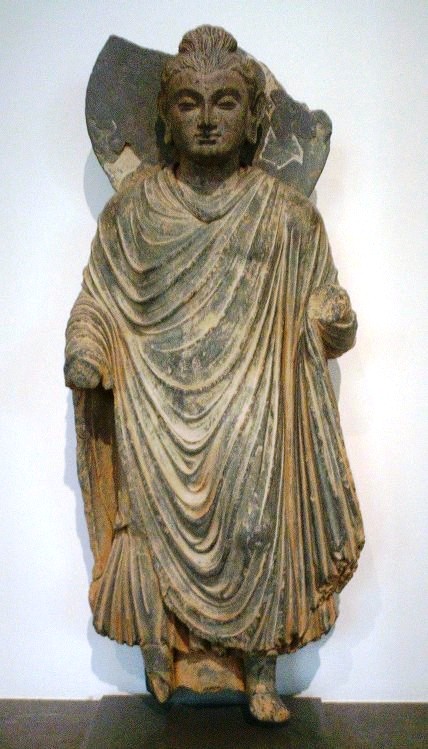


The Four Noble Truths form a connected teaching. The first asks us to recognize dukkha—pain, instability, and dissatisfaction. The second examines craving, or taṇhā, as a cause. The third points to the possibility of cessation. The fourth turns to practice: how might we cultivate the conditions for release?
The Buddha’s answer is the Noble Eightfold Path. It is not a simple checklist, a promise that one technique will end every difficulty, or a demand for perfection. It is a framework of understanding, conduct, and mental training whose factors support one another.
If you are new to the series, you may want to begin with Understanding the First Noble Truth of Buddhism: Dukkha, read the Second Noble Truth and craving, or start with the Four Noble Truths overview. The site also has a broader guide to the Eightfold Path.
What Is the Fourth Noble Truth?
In the first discourse, the Buddha identifies the way leading to the cessation of dukkha as the Noble Eightfold Path:
“Right view, right resolve, right speech, right action, right livelihood, right effort, right mindfulness, right concentration.” — SN 56.11, translated by Thanissaro Bhikkhu
The Pali word magga means “path.” In SN 45.8, “An Analysis of the Path”, the Buddha examines the eight factors in more detail. They are called “right” in the sense of belonging to the way that leads toward awakening and the ending of dukkha—not as a device for judging other people.
The fourth truth is often called a middle way. SN 56.11 describes it as avoiding the extremes of sensual indulgence and self-affliction. That does not reduce practice to a comfortable compromise. It points toward a disciplined way of living and training that is neither organized around chasing every pleasure nor around punishing the body and mind.
The Eight Factors of the Noble Eightfold Path
The following brief descriptions draw on SN 45.8. English translations vary: for example, sammāsaṅkappa is translated as both “right resolve” and “right intention.”
Wisdom (paññā)
1. Right view (sammā-diṭṭhi)* In SN 45.8, right view includes understanding dukkha, its origin, its cessation, and the path leading to cessation. It is more than adopting a positive outlook; it concerns seeing the Four Noble Truths clearly.
2. Right intention or resolve (sammā-saṅkappa)* The discourse describes intentions of renunciation, freedom from ill will, and harmlessness. These orientations shape what we pursue and how we regard others.
Ethical conduct (sīla)
3. Right speech (sammā-vācā)* SN 45.8 describes refraining from lying, divisive speech, harsh speech, and idle chatter. This is not a rule to stay silent whenever a conversation is uncomfortable. Honest, timely speech can be necessary, including when someone needs protection or a boundary.
4. Right action (sammā-kammanta)* Thanissaro Bhikkhu’s translation of SN 45.8 names refraining from taking life, stealing, and sexual intercourse; the Bhikkhu Bodhi translation of the same discourse uses “sexual misconduct.” The wording varies across translations and contexts. These principles point toward conduct that avoids harming others and supports trust.
5. Right livelihood (sammā-ājīva)* The Buddha describes giving up dishonest livelihood and sustaining oneself through right livelihood. Applying this factor can involve asking how our work affects others and whether it depends on deception or harm. The practical details will differ across lives and circumstances.
Mental discipline (samādhi)
6. Right effort (sammā-vāyāma)* SN 45.8 describes four aspects of effort: preventing unskillful qualities from arising, abandoning those that have arisen, cultivating skillful qualities, and sustaining their development. This is not relentless self-correction; effort needs discernment and balance.
7. Right mindfulness (sammā-sati)* The discourse describes mindfulness of the body, feelings, mind, and mental qualities, practiced with care and clear awareness. Mindfulness here is not merely attention used to become more productive. It belongs to a wider path of understanding and ethical practice.
8. Right concentration (sammā-samādhi) In SN 45.8, the Buddha analyzes right concentration through the four jhānas*, deep states of meditative collectedness. That traditional definition is more specific than everyday focus or relaxation. Learning meditation can support practice, but a short exercise in attention should not be mistaken for the full factor as described in the discourse.
The Three Trainings and How the Factors Support One Another
A traditional way of organizing the path is through three trainings:
- Wisdom (paññā):* right view and right intention or resolve.
- Ethical conduct (sīla):* right speech, right action, and right livelihood.
- Mental discipline or concentration (samādhi):* right effort, right mindfulness, and right concentration.
This grouping is a framework for understanding the factors, not a set of eight isolated boxes. Bhikkhu Bodhi’s exposition of the Noble Eightfold Path describes the factors as components that support one another. It also notes that some sequence in training may unfold, even as the factors can become present together with progress. So the path is not simply a checklist to finish in order, nor does the grouping mean that ethics, meditation, or wisdom can be practiced without regard for the others.
For example, seeing how an angry reaction contributes to conflict can inform an intention to act without ill will. That intention can shape what we say. Mindful attention may help us recognize anger before it becomes harmful speech, while effort can support a different response. This is a contemporary illustration of how factors may work together, not a quotation or scenario from SN 45.8.
How the Path Can Inform Everyday Life
The early discourse explains the factors in a traditional setting. The following examples are practical reflections for modern readers, not a claim that the sutta gives these specific instructions:
- During disagreement: We can pause to ask whether our words are true and useful, and whether we are trying to clarify a problem or simply wound someone.
- At work: We can consider whether our livelihood depends on deception or avoidable harm, while recognizing that people’s choices are shaped by real economic constraints.
- After a mistake: Instead of hiding it or defining ourselves by it, we can acknowledge what happened, repair harm where possible, and learn from the pattern.
- While practicing attention: We can notice a wandering mind without treating each distraction as failure, then gently return to the chosen object of attention.
These examples do not turn the path into a general self-improvement program. In Buddhist teaching, the path is directed toward understanding and release from dukkha. Ordinary improvements in communication or attention may be useful, but they are not by themselves proof of awakening.
The Attitude the Fourth Noble Truth Encourages
The path can be approached with seriousness and kindness:
- Humility: The eight factors invite continuing inquiry rather than a claim that we have mastered them.
- Care for others: Ethical conduct is not only an internal exercise; our speech, work, and actions affect people around us.
- Patience: Change often takes practice, support, and time. Difficulty is not proof that a person is unfit for the path.
- Discernment: The path is more than following rules mechanically. It asks us to learn what reduces harm and supports understanding.
The word “right” should not become a weapon for criticizing ourselves or others. It describes factors of a path that can be studied and cultivated.
Practicing with the Fourth Noble Truth
These brief activities are contemporary reflections inspired by the path factors, not direct quotations or prescribed exercises from SN 45.8. They are starting points for attention, not guarantees of liberation.
1. Review one conversation
At the end of a conversation, consider: “Was I truthful? Did my words create unnecessary division or harm? Is there anything I should clarify or repair?” The aim is learning, not building a case against yourself.
2. Notice the intention before acting
Before sending a message or making a decision, pause long enough to ask: “What am I hoping this action will do? Is there a way to act with less ill will or harm?” You may still need to speak firmly or make a difficult choice.
3. Try a short mindfulness practice
If it feels comfortable, sit for a few minutes and notice the breath or sensations in the body. When attention wanders, recognize that it wandered and return gently. This is a simple reflection on attention, not a complete definition of right mindfulness or right concentration.
4. Choose one ethical question to explore
Consider one area of speech, action, or livelihood where you could reduce harm. Ask what is realistically within your control, and what support or information you might need. Ethical reflection should take actual constraints seriously.
Further Reading on the Noble Eightfold Path
- DhammaTalks — SN 45.8, “An Analysis of the Path,” translated by Thanissaro Bhikkhu The early discourse that defines all eight factors and analyzes them individually.
- DhammaTalks — SN 56.11, “Setting the Wheel of Dhamma in Motion,” translated by Thanissaro Bhikkhu The Buddha’s first discourse, presenting the Four Noble Truths and identifying the Eightfold Path as the way of practice leading to cessation.
- SuttaCentral — SN 45.8, translated by Bhikkhu Bodhi A second translation of the discourse analyzing all eight path factors.
- Access to Insight — Bhikkhu Bodhi, “The Noble Eightfold Path: The Way to the End of Suffering” A detailed modern exposition of the path factors and the three trainings, with references to early Buddhist texts.
The Path and the Other Noble Truths
The fourth truth does not stand apart from the first three. It is the path for understanding dukkha, working with its causes, and realizing the possibility of cessation. In SN 45.8, right view includes knowledge of all four truths; in SN 56.11, the path is both the fourth truth and the way leading toward the third.
For the series’ broader context, see the Four Noble Truths overview, along with the existing essays on dukkha and craving.
Conclusion
The Fourth Noble Truth presents the Noble Eightfold Path as the way of practice leading to the cessation of dukkha. Its eight factors bring together wisdom, ethical conduct, and mental discipline. They are not a guaranteed formula, a rigid checklist, or a set of unrelated self-help techniques.
The path asks for careful understanding and sustained practice. Its everyday applications can begin with how we see, speak, act, work, and train attention, while remaining connected to its larger purpose: cultivating the conditions for freedom from craving and suffering.